

Norges Bank holds rate at 4.5%, ready to hike if inflation persists
 By Neha KapoorEconomy Correspondent, Peepals Business
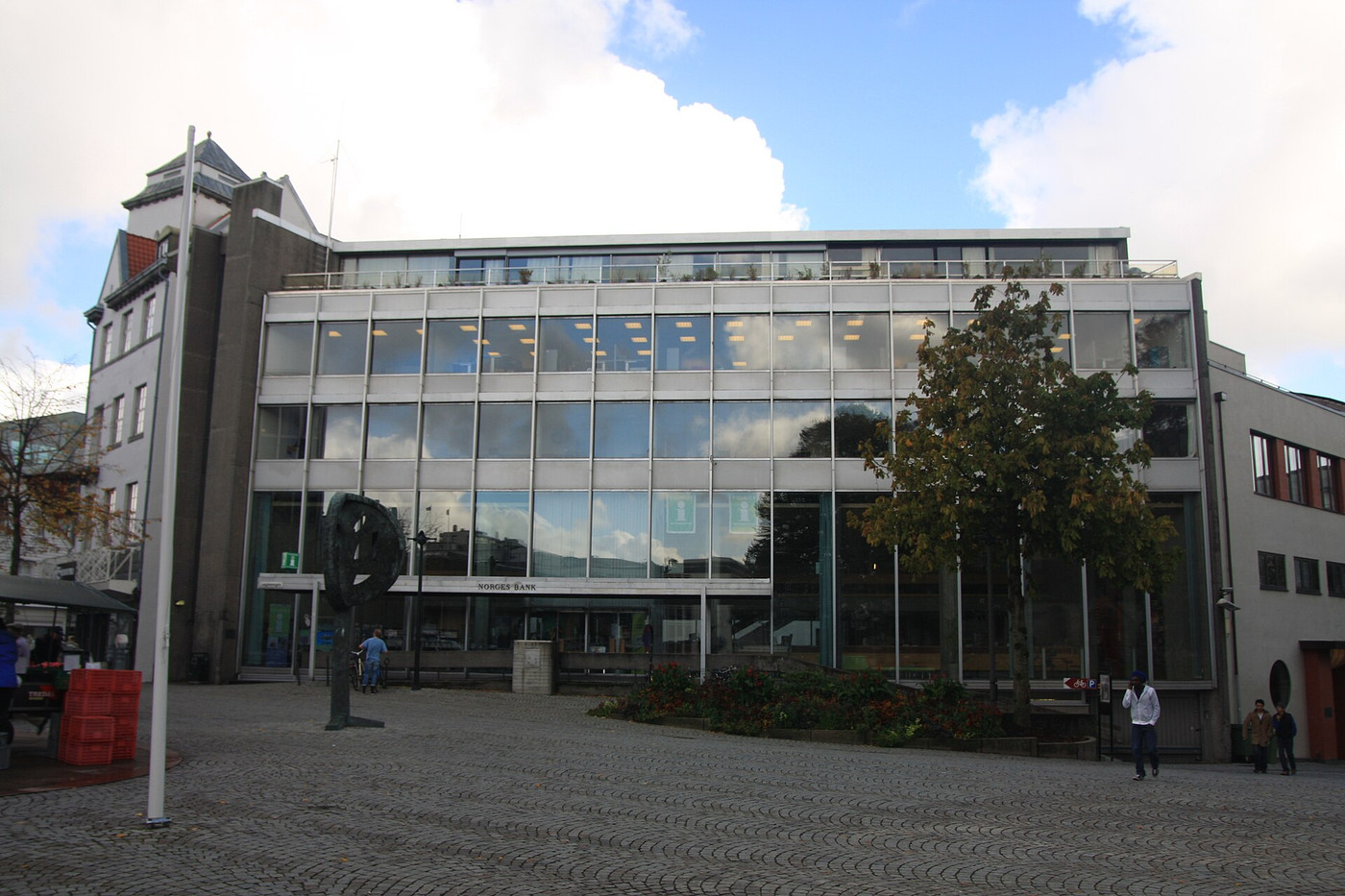
File photo: Jarvin (CC BY-SA 3.0 no), via Wikimedia Commons
Norway's central bank held its policy rate at 4.5% on 5 November 2026 and said it is ready to raise it again as domestic inflation runs hot.
What Happened
Norway's central bank, Norges Bank, kept its policy rate unchanged at 4.5% on Thursday, 5 November 2026, and said it is prepared to raise it again if needed to bring inflation down. Its rate-setting committee took the decision at a meeting on Wednesday, 4 November; the rate applies from 6 November. Governor Ida Wolden Bache said it will likely be necessary to keep the rate high for some time, after domestic prices rose faster than the bank had projected in September.
Key Facts
- Decision: policy rate held at 4.5%, announced 5 November 2026, after a committee meeting on 4 November.
- Effective: the rate applies from 6 November 2026.
- Previous move: the bank raised the rate to 4.5% at its September meeting.
- Inflation: consumer prices rose 3.4% from a year earlier in September; inflation adjusted for tax changes and excluding energy was 3.0%.
- Guidance: the governor said the rate will probably need to stay elevated for a time, and the bank is ready to raise it further if needed.
- Next decision: Thursday, 17 December 2026, with a new Monetary Policy Report.
- Outlook: the bank Nomura, as reported, expects no change in 2026 and 2027 and sees the next move as a cut, probably not before 2028.
Why It Matters
Norway's decision is part of a wider turn in rich-country central banks this autumn. Instead of cutting interest rates, several are holding or raising them because inflation has proved stubborn. On the same day, the Bank of England raised its Bank Rate by a quarter point to 4%. Norges Bank had already raised its rate in September and is now pausing to see whether that is enough.
The bank's main worry is that prices made at home, such as services and wages, are rising faster than expected. That kind of inflation is harder to bring down than a jump in energy prices, which can reverse quickly. By saying it is ready to raise rates again, the bank is signalling to businesses and workers that it will not let price rises settle at a higher level.
For borrowers in Norway, a policy rate of 4.5% keeps mortgage and business loan costs high. For savers, it means better returns on deposits. When several rich-country central banks keep rates high together, global borrowing costs stay elevated, which also shapes how much foreign money flows into emerging markets such as India.
Peepals calculation: With the policy rate at 4.5% and headline inflation at 3.4%, the "real" policy rate, the interest rate after inflation, is about 1.1 percentage points (4.5 − 3.4). Measured against the 3.0% inflation figure that excludes energy and tax changes, it is about 1.5 points (4.5 − 3.0). Norges Bank's rate is half a percentage point above the Bank of England's new 4% (4.5 − 4.0). The next decision, on 17 December, is six weeks after this one. Our calculation from the reported figures.
| Central bank | Decision on 5 November 2026 | Rate |
|---|---|---|
| Norges Bank (Norway) | Held | 4.5% |
| Bank of England (UK) | Raised by 0.25 point | 4.0% |
Impact
Short-term: Norwegian households and businesses keep paying high borrowing costs, and the bank's stated readiness to raise rates again keeps pressure on wage and price setters.
Long-term: If domestic inflation does not slow, the bank may raise rates again at a later meeting; if it slows, the rate could stay at 4.5% for an extended period, as some economists expect.
Who is affected: Norwegian borrowers and savers; businesses that trade with Norway; investors in Norwegian assets; and, more broadly, emerging-market economies such as India that are affected when rich-country interest rates stay high.
What to watch next: Norges Bank's next policy decision and Monetary Policy Report on 17 December 2026.
Key Takeaway
Norges Bank held its policy rate at 4.5% on 5 November 2026 and said it may raise it again, as domestic inflation in Norway runs faster than expected.
Questions and Answers
What did Norges Bank decide on 5 November 2026?
It kept Norway's policy rate unchanged at 4.5%, after a committee meeting on 4 November, with the rate applying from 6 November.
Why did Norges Bank not cut rates?
Domestic price increases came in faster than the bank expected in September. Governor Ida Wolden Bache said the rate will likely need to stay high for some time and could be raised further if needed.
What is Norway's inflation rate?
Consumer prices rose 3.4% in the year to September 2026, and 3.0% when adjusted for tax changes and excluding energy.
When is Norges Bank's next rate decision?
On 17 December 2026, together with a new Monetary Policy Report.
Disclaimer: Prepared by the Peepals newsroom from publicly available sources with AI assistance. Information is accurate to the best of our knowledge at the time of publication and may change. Images may be representative. Not professional advice. Report an error via our contact page.
By Neha Kapoor, Economy CorrespondentCovers Economy and more for Peepals Business. All stories by Neha Kapoor
KOSPI falls below 5,000, circuit breaker hit as Samsung, SK Hynix slide
Daksham Growth Ventures raises Rs 125 crore for consumer start-up fund
Get the day's stories in your inbox
Peepals Weekly: the week decoded, free. One email a week, unsubscribe in one click.
Neha Kapoor is a pen name of the Peepals Global Editorial Team, which researches, fact-checks and publishes every story. The portrait is an illustration.