
Madras High Court: father cannot take child from mother by force
 By Vikram JoshiLife Balance Correspondent, Peepals Shakti

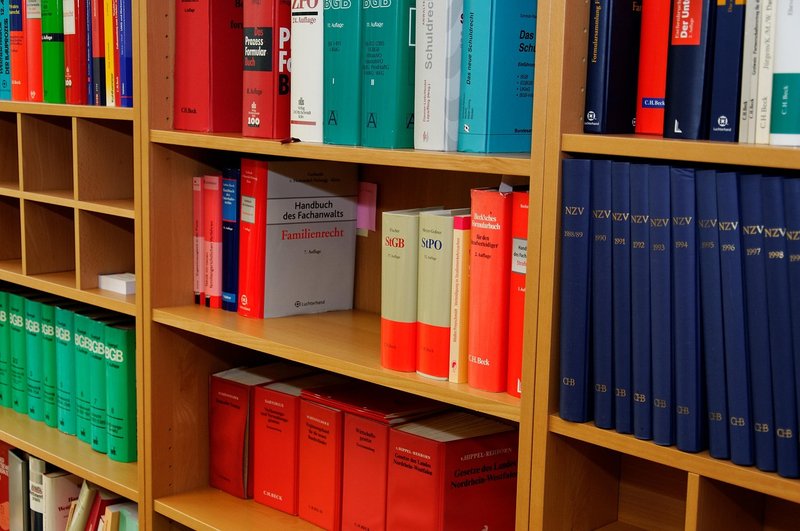
Representative image: 3194556 / Pixabay
Madras High Court orders a father to return a 2.5-year-old to the mother; being natural guardian gives no right to take custody by force (order of 27 October 2026).
What Happened
The Madras High Court has ruled that a father cannot take his young child away from the mother by force, even though the law treats him as the child's natural guardian. A division bench of Justice A.D. Jagadish Chandira and Justice B. Karthikeyan ordered a father to hand his two-and-a-half-year-old child back to the mother. The order, in habeas corpus petition HCP No. 2125 of 2026, is dated Tuesday, 27 October 2026, and was reported in legal and regional news between 8 and 10 November 2026. The court said a parent who wants custody must ask for it through the procedure set down by law.
Key Facts
- Court: Madras High Court, division bench of Justice A.D. Jagadish Chandira and Justice B. Karthikeyan.
- Case: habeas corpus petition HCP No. 2125 of 2026, filed by the child's mother under Article 226 of the Constitution; the order is dated 27 October 2026.
- The couple married on 21 January 2021 at Puducherry, according to the order.
- The mother said the father came to her parents' home, where she was living with the child, and took the child away by force; she said her police complaint had not led to action.
- The bench held that being the natural guardian does not entitle a father to take custody by force.
- The court directed the father to hand the child back to the mother; either parent may still seek custody before the proper court.
- The ruling is reported as 2026 LiveLaw (Mad) 539.
Why It Matters
Separations in India often reach a stage where one parent simply takes a child from the other's home and waits for the law to catch up. The parent who is left behind, usually the mother in the cases that reach the High Courts, then has to begin a long fight to get the child back, while the child gets used to a new home. This ruling says plainly that such a move does not create a right. Whatever claim a parent has, it must be tested before a court, not settled at a doorstep.
The order also makes a narrow but useful legal point. Under Indian family law a father is described as the natural guardian of a minor, and some fathers read that as a licence to remove a child at will. The bench drew a line between guardianship, which is a legal status, and custody, which is a question of the child's day-to-day care. The status, the court said, does not allow the use of force to take the child.
For families, the practical message is that the writ of habeas corpus, meant to free a person held without lawful authority, can be used to bring back a very young child who has been taken without any court order. The High Court did not decide which parent should have long-term custody. That question is left to the family court or guardianship proceedings, where the child's welfare is the deciding test.
Peepals timeline: The couple married at Puducherry on 21 January 2021, according to the order. The mother moved the High Court after the child was taken from her parents' home and her police complaint brought no result. The bench passed its order on Tuesday, 27 October 2026. Regional news reported the ruling on Sunday, 8 November 2026, and a legal news service published it with the citation 2026 LiveLaw (Mad) 539 on Tuesday, 10 November 2026. The same fortnight saw two other High Court custody rulings: on 4 November the Jharkhand High Court kept a child with the mother while upholding the father's visiting rights, and on 5 November the Allahabad High Court said that a pending case under the Guardian and Wards Act, 1890 is not an absolute bar to a habeas corpus petition for a child's custody.
| Court | Date of report | What it said |
|---|---|---|
| Madras High Court | 10 November 2026 | Natural guardian cannot take custody by force; child returned to mother |
| Allahabad High Court | 5 November 2026 | Pending guardianship case does not always bar a habeas corpus plea |
| Jharkhand High Court | 4 November 2026 | Mother keeps custody; father's visits upheld as the child's right to both parents |
Impact
Short-term: The child goes back to the mother, and the father keeps the right to ask the proper court for custody or visiting rights. Police receiving complaints of a child being taken by one parent may also find it harder to treat them as a purely private family matter.
Long-term: The ruling adds to a line of High Court decisions which say that the welfare of the child, not the rights of either parent, decides custody, and that self-help by one parent will not be rewarded. Lawyers are likely to cite it when a child is removed without a court order during a separation.
Who is affected: Separating and divorcing couples with young children, grandparents whose homes become the scene of such disputes, police stations that receive custody complaints, and family courts that hear guardianship cases.
Key Takeaway
The Madras High Court has made clear that a father's status as natural guardian does not let him take a young child from the mother by force; custody must be sought through the courts.
Questions and Answers
What did the Madras High Court decide in this custody case?
In an order dated 27 October 2026, a bench of Justices A.D. Jagadish Chandira and B. Karthikeyan held that a father, though the natural guardian, cannot take a minor child's custody by force, and directed him to return the two-and-a-half-year-old child to the mother.
Does this mean the mother now has permanent custody?
No. The High Court dealt with a habeas corpus petition about the child being taken by force. Long-term custody and visiting rights are left to the proper court, which decides them on the child's welfare; either parent can approach it.
What is a habeas corpus petition in a child custody case?
It is a petition asking a High Court to order that a person be produced and freed from unlawful custody. Parents use it when a child has been taken without any court order, as the mother did here under Article 226 of the Constitution.
What should a parent do instead of taking a child away?
According to the court, a parent who wants custody must seek it in accordance with the procedure established by law, which means applying to the family court or the court hearing guardianship cases rather than removing the child.
Disclaimer: Prepared by the Peepals newsroom from publicly available sources with AI assistance. Information is accurate to the best of our knowledge at the time of publication and may change. Images may be representative. Not professional advice. Report an error via our contact page.
By Vikram Joshi, Life Balance CorrespondentCovers Life Balance and more for Peepals Shakti. All stories by Vikram Joshi
Zero to Three parenting survey 2026: 56% reject physical discipline they got
Calvin Klein Holiday 2026: Jung Kook picks his own edit in global campaign
Get the day's stories in your inbox
Peepals Weekly: the week decoded, free. One email a week, unsubscribe in one click.
Vikram Joshi is a pen name of the Peepals Global Editorial Team, which researches, fact-checks and publishes every story. The portrait is an illustration.