
Working carers study: half skip family-friendly measures over stigma fears
 By Simran KaurFashion Writer, Peepals Shakti

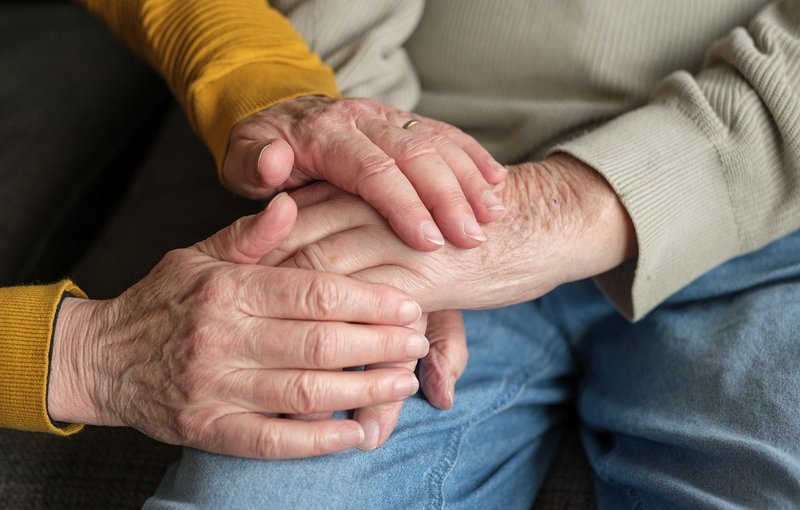
Representative image: VinzentWeinbeer / Pixabay
A Hong Kong survey of 566 working caregivers found more than half never use family-friendly measures, though users report less depression and caregiving burden.
What Happened
A survey of working caregivers in Hong Kong, led by Professor Bobo Lau of Tung Wah College and reported in the week ending Saturday, 7 November 2026, found that more than half of carers have never used the family-friendly measures their employers offer, even though those who do use them report less depression and a lighter caregiving burden. The Hong Kong Working Caregivers' Mental Well-being Survey, carried out by academics from five Hong Kong universities and colleges, covered 566 people who combine a job with caring for a family member. Lau said some carers fear being labelled by colleagues if they keep taking leave to care for relatives.
Key Facts
- Who: 566 working caregivers aged 21 to 73, in full-time, part-time and self-employed work; 30 unpaid caregivers also took part.
- Led by: Professor Bobo Lau of Tung Wah College, with academics from five Hong Kong universities and colleges.
- Access versus use: nearly 70% said their employer offered at least one caregiver-friendly measure, but more than half had never used any.
- Most used: flexible working hours (33% of respondents), followed by part-time arrangements (17%), working from home (13%) and compressed working weeks (12%).
- Mental health: 45% of carers who had used such measures recorded depression scores above the average level, against 55% of those who had not.
- Most helpful: flexible hours and working from home were the measures most strongly linked to lower caregiving burden and stress, according to the researchers.
- Barrier: fear of how colleagues see repeated caregiving leave, which Lau described as "a certain degree of labelling".
Why It Matters
Many families depend on someone who holds down a job and also looks after an ageing parent, a sick spouse or a child with special needs. This study puts numbers on a problem that is easy to overlook: the support may exist on paper, but people do not use it. A policy that sits unused helps no one, and the survey suggests the reason is often not cost or rules but workplace culture, the worry that asking for flexibility will mark someone as less committed.
The gap between users and non-users is notable. Among carers who had used caregiver-friendly measures, fewer had high depression scores than among those who had not. The survey is a snapshot, so it cannot prove that the measures caused the difference: carers in more supportive workplaces may differ in other ways. Still, the pattern is in the direction that employers and families would hope, and the researchers singled out two practical, low-cost measures, flexible hours and working from home, as the most helpful.
For Indian families and employers, the study's message, that offering flexibility is not enough unless managers and colleagues make it normal to use it, applies to Indian offices as much as to Hong Kong ones. Experts quoted on the study called for workplace cultures to change so that carers are not stigmatised.
Peepals calculation: The share of carers with above-average depression scores was 10 percentage points lower among those who used family-friendly measures (55% − 45% = 10), which means the users' rate was about 18% lower in relative terms (45 ÷ 55 ≈ 0.82). If nearly 70% of the 566 carers had access to at least one measure, that is roughly 390 people (566 × 0.7 ≈ 396) who could have used support, yet more than half of all respondents never did. Our calculation from the reported figures.
| Measure | Share of respondents who used it |
|---|---|
| Flexible working hours | 33% |
| Part-time arrangement | 17% |
| Working from home | 13% |
| Compressed working week | 12% |
Impact
Short-term: Employers that already offer flexible hours or home working may need to look at whether staff feel free to use them, for example by having managers state openly that caregiving leave and flexibility will not count against anyone.
Long-term: As populations age and more workers care for older relatives, workplaces that make support easy to use are likely to keep experienced staff who might otherwise cut their hours or leave.
Who is affected: Employees caring for elderly parents, spouses or children; their families; employers and human resources teams; and policymakers designing support for working carers.
Key Takeaway
A Hong Kong survey of 566 working carers found that more than half never use the family-friendly measures on offer, partly for fear of being labelled, even though users report less depression and caregiving burden.
Questions and Answers
What did the Hong Kong working carers study find?
The survey of 566 working caregivers, led by Professor Bobo Lau of Tung Wah College, found that nearly 70% had access to at least one caregiver-friendly measure at work, but more than half had never used one. Users reported less depression and a lower caregiving burden.
Which workplace measures help working carers most?
According to the researchers, flexible working hours and working from home were the most effective in easing carers' burden and stress. Flexible hours were also the most used measure, at 33% of respondents.
Why do carers not use family-friendly measures?
Lau said some carers worry about how colleagues view them when they take repeated leave for caregiving, describing it as "a certain degree of labelling". Experts called for workplace cultures to change so carers are not stigmatised.
Does the study prove family-friendly measures reduce depression?
No. It shows that 45% of users had above-average depression scores against 55% of non-users, but a survey of this kind cannot show cause and effect, because carers who use the measures may differ in other ways.
Disclaimer: Prepared by the Peepals newsroom from publicly available sources with AI assistance. Information is accurate to the best of our knowledge at the time of publication and may change. Images may be representative. Not professional advice. Report an error via our contact page.
By Simran Kaur, Fashion WriterCovers Fashion and more for Peepals Shakti. All stories by Simran Kaur
Reformation Q3 2026: sustainable womenswear label lifts outlook as revenue rises 19%
Postpartum depression study finds no clear link to red meat, processed food
Get the day's stories in your inbox
Peepals Weekly: the week decoded, free. One email a week, unsubscribe in one click.
Simran Kaur is a pen name of the Peepals Global Editorial Team, which researches, fact-checks and publishes every story. The portrait is an illustration.