Honeywell launches Forge Cognition AI to run buildings with Nvidia and Dell
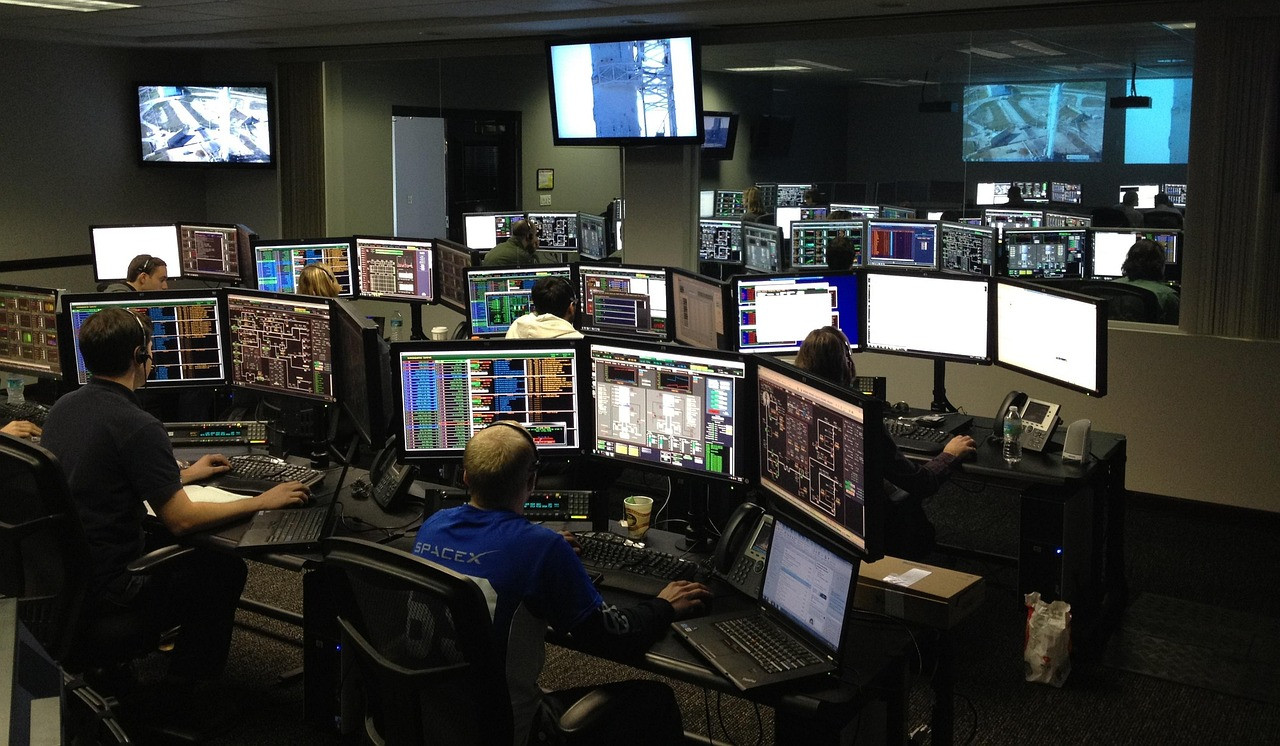
Representative image: SpaceX-Imagery / Pixabay
Honeywell launched Forge Cognition on 14 October 2026, an AI agent and digital twin platform for buildings built with Nvidia and Dell; humans stay in control.
What Happened
Honeywell on Wednesday, 14 October 2026, launched Forge Cognition, an artificial intelligence platform that combines AI agents with digital twins, virtual replicas of physical facilities, to help run buildings, campuses and industrial sites. The platform was built with Nvidia, which supplies AI models and simulation software, and Dell, which supplies the servers and storage that run it on site. It connects to a building's heating, ventilation and air-conditioning (HVAC), security and power systems. In a pilot at Nvidia's Voyager headquarters, Honeywell says the system cut unnecessary building-management alerts by up to 90 per cent and produced estimated energy savings of about 10 per cent. Honeywell's chief technology officer, Suresh Venkatarayalu, said the platform's fully autonomous mode is not switched on and that humans will remain in control for roughly the next two to three years.
Key Facts
- Honeywell launched Forge Cognition on 14 October 2026 for building, campus and industrial facility operations.
- The platform pairs AI agents with digital twins and links to HVAC, security and power systems.
- Nvidia provides AI models and simulation tools, including Nemotron, Omniverse and Cosmos; Dell provides on-site servers and storage.
- At Nvidia's Voyager headquarters, Honeywell reports up to a 90 per cent reduction in unnecessary alerts and about 10 per cent estimated energy savings; these are company-reported figures.
- Honeywell says it is piloting the system at Voyager and five other sites.
- The platform has manual, semi-autonomous and autonomous modes, but the autonomous mode is not active.
- Chief technology officer Suresh Venkatarayalu said humans will stay in charge for about two to three years.
Why It Matters
Large buildings and factories already produce huge amounts of data from sensors, meters, cameras and control systems. The problem for the people who run them is usually not a lack of information but too much of it: building-management systems raise so many alerts that staff struggle to tell which ones matter. Honeywell's pitch is that AI agents can sift those signals, explain what is happening and suggest or take action, while a digital twin lets operators test a change virtually before making it in the real building.
The reported 90 per cent drop in unnecessary alerts, if it holds up across other sites, addresses one of the most common complaints in facility management. The estimated 10 per cent energy saving matters because energy is one of the biggest running costs of a large building.
The cautious approach to autonomy is also telling. Industrial and building systems control physical equipment, and mistakes can be costly or dangerous. By keeping humans in the loop for the next few years, Honeywell is signalling that "agentic" AI in physical operations will grow step by step rather than all at once. The partnership with Nvidia and Dell also shows how chip and hardware makers are pushing AI out of data centres and into the places where it controls real machines, the area often called industry 4.0.
| Feature | Detail |
|---|---|
| Launch date | 14 October 2026 |
| Partners | Nvidia (models, simulation), Dell (on-site hardware) |
| Systems covered | HVAC, security, power |
| Pilot result at Nvidia Voyager | Up to 90% fewer unnecessary alerts, about 10% estimated energy saving |
| Autonomy | Manual and semi-autonomous now; autonomous mode not active |
Impact
Short-term: Facility managers at large campuses, data centres and factories will look at Forge Cognition as a way to cut alarm overload and energy bills. Early customers are likely to use it in advisory or semi-autonomous mode.
Long-term: If AI agents prove reliable in running buildings, the job of facility teams may shift from watching dashboards to supervising AI systems and handling exceptions. Building-automation competitors are likely to respond with their own AI platforms. For Indian builders of commercial campuses, data centres and industrial parks, such tools could shape how new facilities are designed and run.
Who is affected: Owners and operators of large buildings, campuses and plants; facility management staff; building-automation and industrial software competitors; and Nvidia and Dell, which are expanding into industrial AI.
Key Takeaway
Honeywell's Forge Cognition, launched on 14 October 2026 with Nvidia and Dell, brings AI agents and digital twins to building operations, with reported big cuts in false alarms but humans kept firmly in control for now.
Questions and Answers
What is Honeywell Forge Cognition?
It is an AI platform launched by Honeywell on 14 October 2026 that combines AI agents with digital twins to help run buildings, campuses and industrial sites, connecting to HVAC, security and power systems.
What role do Nvidia and Dell play?
Nvidia supplies the AI models and simulation software, including Omniverse, used to build the digital twins, while Dell provides the servers and storage that run the platform on site.
What results has Honeywell reported?
In a pilot at Nvidia's Voyager headquarters, Honeywell reports up to a 90 per cent reduction in unnecessary alerts and about 10 per cent estimated energy savings. These figures come from the company.
Will the AI run buildings on its own?
Not yet. The platform has an autonomous mode, but it is not active, and Honeywell's CTO said humans will remain in control for roughly the next two to three years.
Disclaimer: Prepared by the Peepals newsroom from publicly available sources with AI assistance. Information is accurate to the best of our knowledge at the time of publication and may change. Images may be representative. Not professional advice. Report an error via our contact page.
Sourced and fact-checked by the Peepals Global Editorial Team
Dow Jones jumps 556 points as investors rotate from AI stocks to defensives
India's exports jump 23% to $44.4 billion in September; trade deficit narrows
Reported, fact-checked and published by the Peepals Global Editorial Team.