
Brihattar Bharat conference marks Greater India Society centenary in Delhi
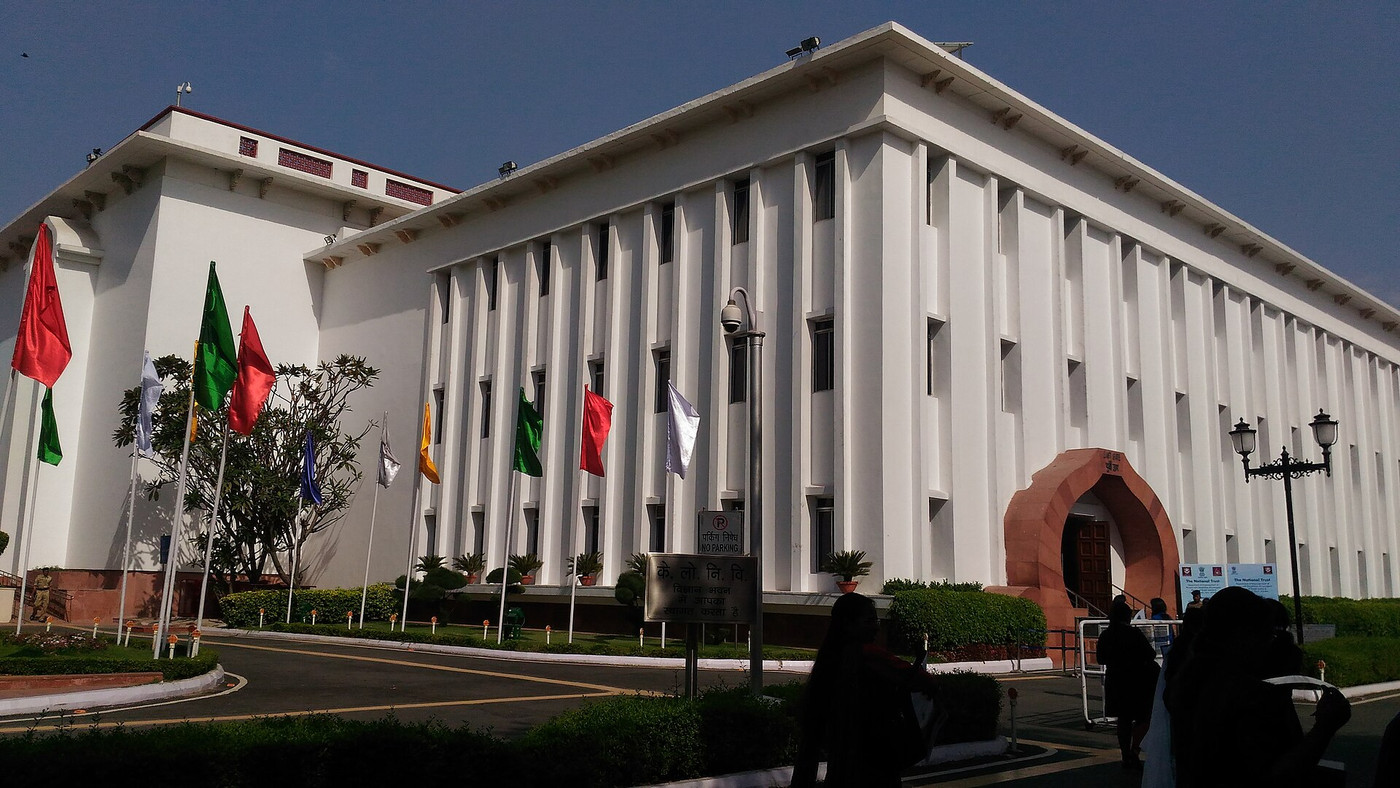
File photo: Sumita Roy Dutta (CC BY-SA 4.0), via Wikimedia Commons
IGNCA's Brihattar Bharat conference, held in New Delhi on October 14-16, 2026, gathered scholars from about 50 countries to study India's cultural links abroad.
What Happened
The Indira Gandhi National Centre for the Arts (IGNCA), which works under the Ministry of Culture, held an international conference on India's cultural connections with the rest of the world at Vigyan Bhawan in New Delhi from October 14 to 16, 2026. Titled 'Brihattar Bharat: International Conference on Bharat's Cultural Connections Across the Globe', it marked 100 years since the Greater India Society was founded in Calcutta on October 14, 1926. Culture Minister Gajendra Singh Shekhawat opened the conference, and a written message from Prime Minister Narendra Modi was read out by Culture Secretary Vivek Aggarwal.
Key Facts
- Dates and venue: October 14 to 16, 2026, at Vigyan Bhawan, New Delhi.
- Organiser: IGNCA, under the Ministry of Culture.
- The conference is part of the Brihattar Bharat Scheme for 2026 to 2031, run by IGNCA under the ministry's Global Engagement Scheme.
- Reports put the number of participating countries at about 50 to 51, with delegates, ambassadors and scholars; countries named included China, Japan, Mongolia, Nepal and Iran.
- Themes covered philosophy, religion, languages, arts, textiles, cuisine, performing arts, trade and diaspora communities.
- The Prime Minister's message referred to growing global recognition of India's heritage, the Gyan Bharatam manuscript mission and efforts to bring back antiquities taken out of India.
- Shekhawat said the idea of Brihattar Bharat should be read as a sphere of historical and cultural connections, not as a political or territorial claim.
Why It Matters
For a hundred years, scholars have studied how Indian ideas, scripts, art forms and religious traditions travelled across Asia and beyond: through monks and traders, along sea routes to South-East Asia, and over land to Central and East Asia. The Greater India Society, set up in Calcutta in 1926, was one of the first organised efforts in India to study these links as a field of research. The centenary conference brings that field back into public view, with a government programme now attached to it.
The word "Brihattar" means "greater" or "wider". Because the old phrase "Greater India" has at times been read as a claim of influence or control over other countries, the minister's remark matters. By describing the idea as a set of historical and cultural connections rather than a territorial claim, the ministry signalled that the programme is meant to work with partner countries and their own scholars, not to speak for them.
For readers of Indian knowledge systems, the conference is also about method. According to the ministry, Shekhawat called for the study of India's global cultural connections to grow into an evidence-based field built on international collaboration and joint preservation work. That means using manuscripts, inscriptions, archaeology, linguistics and trade records, and checking them against the work of scholars in the countries concerned. It separates research from belief and from national pride, which is how the subject earns credibility abroad.
The link to the Gyan Bharatam mission is practical. Many texts that record India's exchanges with other regions survive only as manuscripts, some of them held outside India. Cataloguing and digitising them is the first step before any comparison or study can begin.
| Item | Detail |
|---|---|
| Event | Brihattar Bharat international conference |
| Dates | October 14 to 16, 2026 |
| Organiser | IGNCA, Ministry of Culture |
| Scheme | Brihattar Bharat Scheme, 2026 to 2031 |
| Occasion | Centenary of the Greater India Society, founded 1926 |
Impact
Short-term: The conference sets out the research themes and partners for the first year of the Brihattar Bharat Scheme. Papers, contacts and proposals from the three days are likely to shape which projects IGNCA takes up first.
Long-term: A five-year scheme gives the study of India's cultural exchanges a steady home inside a national institution. If it leads to joint projects, shared archives and co-published research with partner countries, it could strengthen cultural diplomacy and widen access to sources that are now scattered across several continents.
Who is affected: Historians, Indologists, archaeologists, linguists and students of Indian knowledge systems; museums and manuscript libraries in India and abroad; partner institutions in the participating countries; and the Indian diaspora, whose own history is part of these connections.
Key Takeaway
IGNCA's Brihattar Bharat conference of October 14-16, 2026, marked the Greater India Society's centenary under a five-year programme to study India's cultural links abroad through evidence and partnership.
Questions and Answers
What was the Brihattar Bharat conference?
It was an international conference on India's cultural connections across the world, held by the Indira Gandhi National Centre for the Arts at Vigyan Bhawan, New Delhi, from October 14 to 16, 2026. It brought together delegates, ambassadors and scholars from about 50 countries.
What is the Greater India Society and why was its centenary marked?
The Greater India Society was founded in Calcutta on October 14, 1926, to study India's cultural and intellectual relations with Asia and other regions. The 2026 conference was held to mark 100 years since its founding.
What is the Brihattar Bharat Scheme?
It is a programme for 2026 to 2031, run by IGNCA under the Ministry of Culture's Global Engagement Scheme, to support research, preservation and partnerships on India's historical cultural links with other countries.
Does Brihattar Bharat mean a territorial claim?
No. Culture Minister Gajendra Singh Shekhawat said at the opening that the idea should be understood as a sphere of historical and cultural connections, not as a political or territorial claim.
Disclaimer: Prepared by the Peepals newsroom from publicly available sources with AI assistance. Information is accurate to the best of our knowledge at the time of publication and may change. Images may be representative. Not professional advice. Report an error via our contact page.
Sourced and fact-checked by the Peepals Global Editorial Team
Reported, fact-checked and published by the Peepals Global Editorial Team.