
Israelis vote in Knesset election as Eisenkot challenges Netanyahu's long rule
 By Rohan SalujaGeopolitics Editor, Peepals Global
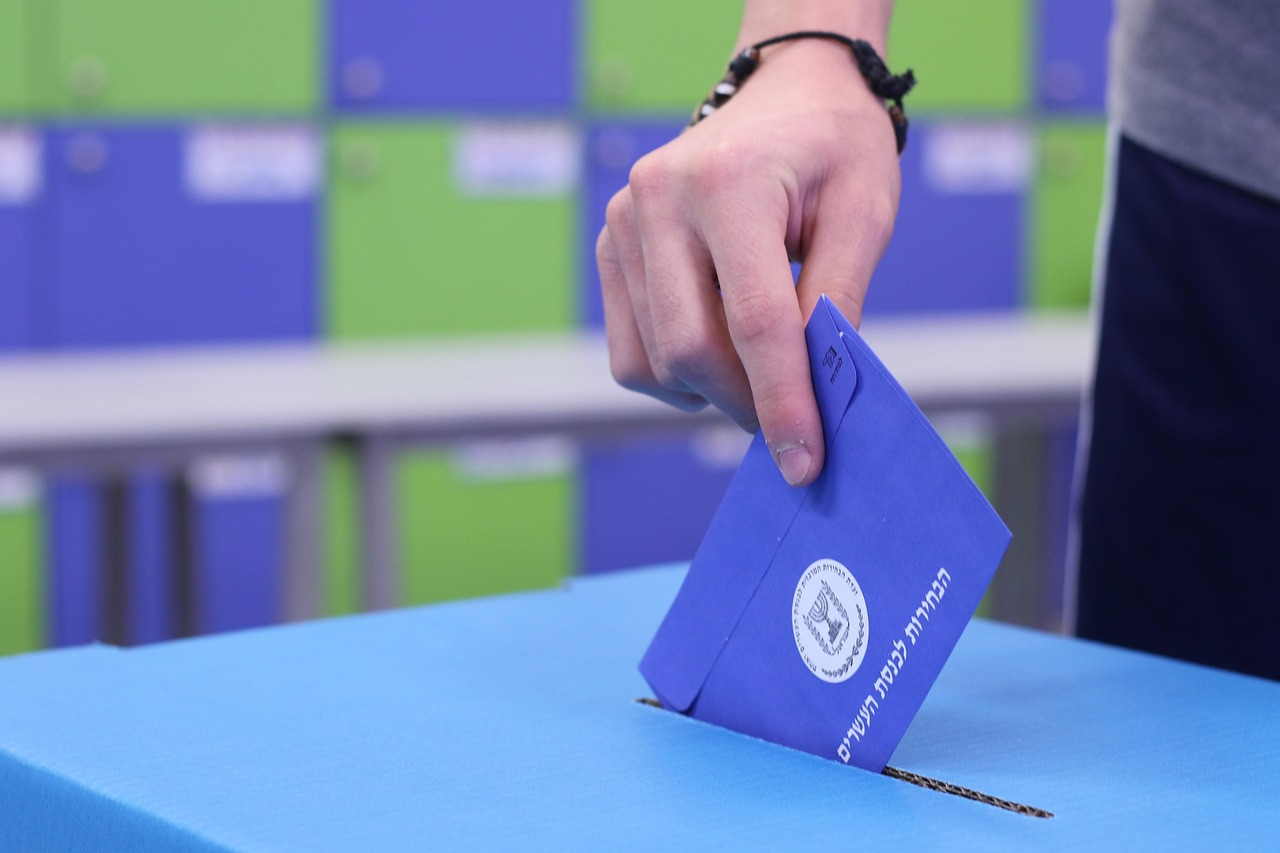
Representative image: OrnaW / Pixabay
Polls opened in Israel's Knesset election on October 27, 2026, with 7.33 million eligible voters choosing between Netanyahu's Likud and Gadi Eisenkot's new Yashar party.
What Happened
Israelis began voting on Tuesday, October 27, 2026, in a general election for the Knesset, the country's parliament, that could decide whether Benjamin Netanyahu stays in power. Polling stations opened at 7 am local time for 7,331,981 eligible voters, and exit polls are due when voting closes at 10 pm, which is after midnight in India. The main contest is between Netanyahu's right-wing Likud and Yashar, a new centrist party led by Gadi Eisenkot, a former chief of staff of the Israeli military. Opinion polls before the vote disagreed on who is ahead, and neither bloc was shown winning the 61 seats needed for a majority on its own.
Key Facts
- Election day: Tuesday, October 27, 2026; polls open 7 am to 10 pm Israel time.
- Eligible voters: 7,331,981.
- Majority needed: 61 of the Knesset's 120 seats.
- Main rivals: Likud, led by Prime Minister Benjamin Netanyahu, and Yashar, led by former military chief Gadi Eisenkot.
- Final polls: one television poll put Yashar first with 23 seats and Likud on 21; another, seen as friendly to Netanyahu, gave Likud 30 and Eisenkot's party about 20.
- Turnout in 2022: 70.6% overall and 53.2% among Arab citizens; pollsters expect higher Arab turnout this time.
- US President Donald Trump has endorsed Netanyahu's re-election.
Why It Matters
This election is seen as a vote on Netanyahu's leadership after the Hamas-led attack of October 7, 2023, and the war in Gaza that followed. Eisenkot has built his campaign around that day, appealing to voters who blame the government for the security failure. Netanyahu has presented himself as the strong leader Israel needs at a time of conflict with Iran and its allies. The choice voters make will shape Israel's approach to Gaza, to Iran and to its relations with Arab states and the United States.
The result may not be clear on election night alone. Voters choose parties rather than individual candidates, and because no party is expected to win 61 seats by itself, the next prime minister will be the leader who can assemble a coalition of at least 61 members. That can take weeks of bargaining with smaller parties, including religious, nationalist and Arab parties, and the smaller parties often decide who governs.
Turnout among Arab citizens could be decisive. If it rises sharply from 2022, as pollsters expect, it could deny the right-wing bloc a majority even if Likud runs close to Yashar.
For India, the result matters because Israel's policy on Iran and Gaza affects the stability of West Asia, including the Strait of Hormuz, through which oil and shipping that India depends on pass. Netanyahu has also courted closer ties, recently inviting Prime Minister Narendra Modi to an Israeli state ceremony.
| Poll (before voting) | Yashar (Eisenkot) | Likud (Netanyahu) |
|---|---|---|
| Poll A | 23 seats | 21 seats |
| Poll B (seen as pro-Netanyahu) | about 20 seats | 30 seats |
Impact
Short-term: Exit polls will give the first indication after voting ends, but official results and seat counts will take longer, and coalition talks will follow.
Long-term: If Netanyahu loses power, Israel's next government could change course on the Gaza war, the response to Iran and its domestic legal and religious disputes. If he wins, he is likely to continue his current security policy.
Who is affected: Israeli citizens, Palestinians in Gaza and the West Bank, neighbouring states, the United States, and countries such as India with security, trade and energy interests in the region.
Key Takeaway
Israel's October 27, 2026 election pits Netanyahu against former army chief Gadi Eisenkot, with polls split and a coalition of 61 seats needed to govern.
Questions and Answers
When is the Israel election and when will results come?
Voting took place on October 27, 2026, from 7 am to 10 pm Israel time. Exit polls come at the close of voting, after midnight India time, and official counts follow later.
Who is challenging Netanyahu in the Israel election?
The main challenger is Gadi Eisenkot, a former chief of staff of the Israeli military, who leads a new centrist party called Yashar.
How many seats are needed to form a government in Israel?
A government needs the support of at least 61 of the Knesset's 120 members, which in practice means a coalition of several parties.
Who is leading the polls?
Polls disagreed. One put Eisenkot's party ahead with 23 seats to Likud's 21, while another gave Likud 30 seats to about 20 for Eisenkot. Neither side was shown reaching 61 seats.
Disclaimer: Prepared by the Peepals newsroom from publicly available sources with AI assistance. Information is accurate to the best of our knowledge at the time of publication and may change. Images may be representative. Not professional advice. Report an error via our contact page.
By Rohan Saluja, Geopolitics EditorCovers Geopolitics and more for Peepals Global. All stories by Rohan Saluja
Ahmedabad to host 2029 World Weightlifting Championships; Moscow gets 2030
Oleshky ceasefire takes effect as aid mission starts; evacuation row persists
Get the day's stories in your inbox
Peepals Weekly: the week decoded, free. One email a week, unsubscribe in one click.
Rohan Saluja is a pen name of the Peepals Global Editorial Team, which researches, fact-checks and publishes every story. The portrait is an illustration.